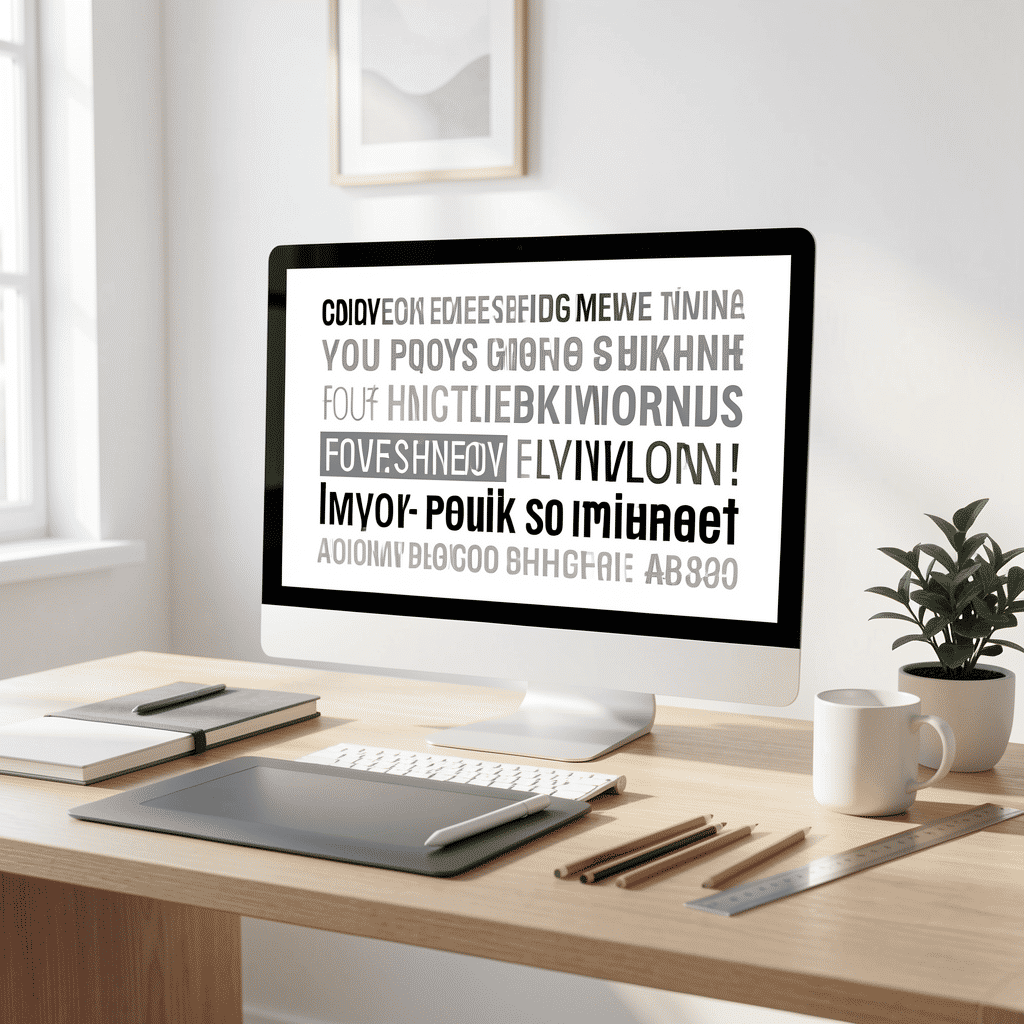
In 2024, the evolution of typography reflects our digital age's ceaseless march towards minimalism and functionally-driven aesthetics. Typography, once a domain dominated by the ornate and elaborate, now embraces simplicity, where less is unequivocally more. This purposeful shift mirrors broader societal changes—prioritizing clarity, accessibility, and resonant brand identities over excessive embellishment.
Digital Aesthetics: Craftsmanship Meets Technology
As digital interfaces continue to dominate daily interaction, typography must cater to both aesthetic appeal and practical readability on various screens and devices. In 2024, digital aesthetics are defined by the seamless integration of technological capabilities with typographic design. Variable fonts have gained prominence, offering design flexibility by allowing a single font file to yield a multitude of styles—empowering designers to craft seamless visual hierarchies with ease and efficiency.
On digital platforms, typography now frequently leverages responsive design principles, adjusting not just in scale but also reflowing to maintain legibility and impact across different screen sizes and orientations. This technological evolution ensures that typography remains impactful whether viewed on a smartwatch or a high-resolution desktop monitor.
Minimalistic Designs: The Power of Simplicity
Minimalism continues to pave the future of typography, driven by the demand for concise communication and an uncluttered visual landscape. In 2024, typographic design embraces negative space more boldly than ever before, using it as an elemental tool for directing focus and enhancing message clarity.
Sans-serif typefaces, with their clean lines and unadorned forms, dominate the digital and print spaces alike, embodying the contemporary aesthetic pursuit of simplicity and purity. The resurgence of retro-futuristic fonts echoes nostalgia while staying rooted within modern design principles, offering a bridge between past influences and current trends.
Impact on Brand Identity
In the context of brand identity, typography transcends its traditional role by embodying the ethos of the brand. It is no longer merely a stylistic choice but a critical component of storytelling and consumer connection. Brands in 2024 leverage typography to communicate tone and personality—be it boldness, elegance, or innovation—at a glance.
Consider the user interfaces of social media applications, where typography not only guides user flow but also reinforces brand recognition. Companies invest in custom typefaces to differentiate themselves, creating unique visual signatures that serve as an extension of their identity. This bespoke approach to typography ensures that brand messaging is as cohesive as it is distinctive.
User Engagement: The Subtle Science
User engagement is at the heart of design choices, and typography in 2024 is finely tuned to enhance interaction and retention. A shift towards more humane, emotionally resonant typography has emerged, wherein typefaces are chosen not only for aesthetic appeal but for their ability to evoke emotion and foster connection.
Emotionally intelligent typography considers factors such as readability under various conditions, aesthetic harmony, and even psychological influences of font shapes and sizes. For instance, rounded typefaces invite warmth and approachability, while more angular fonts convey efficiency and modernity. As user engagement becomes increasingly crucial, these subtleties in typographic choice augment both user satisfaction and brand loyalty.
In conclusion, the evolution of typography in 2024 underscores a transformative period where digital functionality, minimalist design, and strategic branding coalesce. As fonts adapt to new technologies and societal preferences, typography remains a vital tool in crafting meaningful connections between brands and their audiences, proving that even in simplicity, there lies profound complexity and potential.